





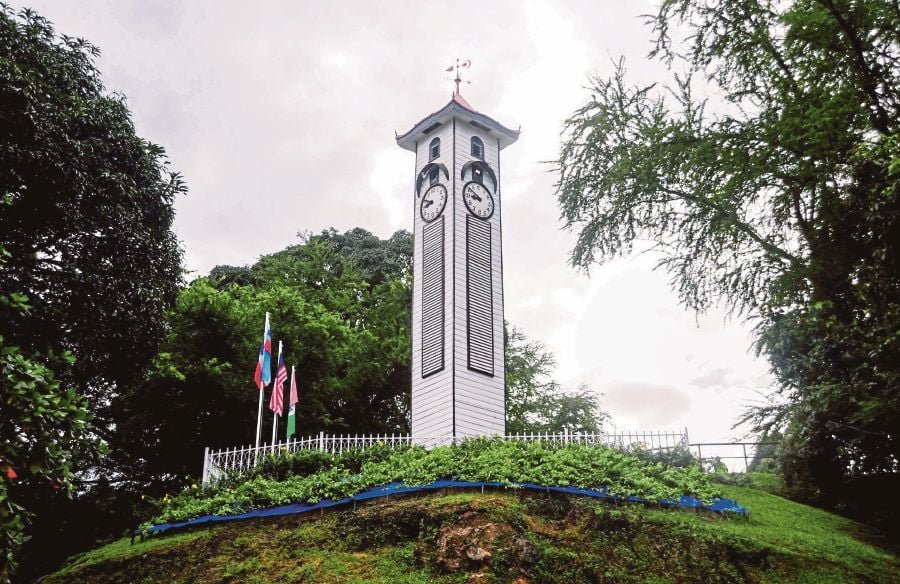
The Atkinson Clock Tower Kota Kinabalu Sabah Malaysia is one of the most iconic heritage landmarks in the city and the oldest standing structure in Kota Kinabalu. Built in memory of Francis George Atkinson in 1905, it has withstood the test of time, surviving World War II bombings that destroyed much of Jesselton (now Kota Kinabalu). Today, it remains a symbol of resilience, colonial history, and cultural heritage in Borneo.
History of Atkinson Clock Tower Sabah Malaysia
Origins of Atkinson Clock Tower in Colonial Jesselton
The tower was erected in memory of Francis George Atkinson, the first District Officer of Jesselton, who died of malaria at just 28 years old. Built in 1905 by his mother, Mary Edith Atkinson, the clock tower served as both a tribute and a practical landmark, keeping time for the small but growing town.
Atkinson Clock Tower During World War II in Sabah
When World War II reached Borneo, Jesselton was heavily bombed, with most of the town reduced to ruins. Remarkably, the Atkinson Clock Tower survived, making it one of the very few pre-war structures still standing today. This survival has made the tower a symbol of resilience and continuity for the city.
Atkinson Clock Tower and the Evolution of Kota Kinabalu
Over the decades, Kota Kinabalu transformed from a small colonial settlement into a thriving modern capital. Throughout this change, the Atkinson Clock Tower remained a steady presence, reminding locals and visitors alike of the city’s early beginnings.
Architecture of Atkinson Clock Tower in Kota Kinabalu Sabah
Design and Construction
The tower is made from Mirabau wood (also called Merbau, a durable hardwood common in Borneo), a durable tropical hardwood native to Borneo. It stands 15.7 meters tall, with a classic, minimalist colonial design. Its whitewashed exterior and simple wooden structure reflect the practicality of early 20th-century architecture in Borneo.
The Clock Mechanism
Originally fitted with a mechanical clock imported from England, the Atkinson Clock Tower has been maintained for over a century. Although repairs and replacements have been made, the clock continues to function, and continues to chime and mark time, making it one of the oldest functional landmarks in Kota Kinabalu.
Symbolism of Atkinson Clock Tower’s Architecture
Unlike grand colonial structures elsewhere, the Atkinson Clock Tower’s modest size and wooden construction symbolize humility and endurance. Its survival through World War II bombings and the city’s rapid modernization has made it a symbol of endurance and heritage for Sabah.
Cultural Importance of Atkinson Clock Tower Sabah Malaysia
Heritage Landmark
The tower is officially recognized as a heritage site under the care of the Sabah Museum and Sabah Cultural Board. It stands as a rare example of preserved colonial-era architecture in the city.
Symbol of Resilience
Surviving WWII and over a century of weathering, the Atkinson Clock Tower has become a cultural emblem of endurance, a reminder of both colonial legacies and local heritage.
Sabah’s Educational and Cultural Tourism
The clock tower is a popular site for educational tours and cultural walks, helping both locals and international visitors understand Sabah’s past. Schools, heritage enthusiasts, and city walking tours frequently include it as a highlight.
Visiting Atkinson Clock Tower Kota Kinabalu Sabah
Location
- Situated along Signal Hill Road, near Gaya Street.
- Centrally located, making it accessible on foot from many city landmarks.
Entrance Fees and Opening Hours
- Entry Fee: Free.
- Opening Hours: Open all day, as it is an outdoor structure.
- Recommended Duration: 30–45 minutes.
Accessibility
- Easily reachable from the city center.
- The site is outdoors, with steps and uneven ground visitors with limited mobility should plan accordingly.
Best Time to Visit Atkinson Clock Tower in Borneo
Morning Visits
- Cooler temperatures for photography and exploration.
- Fewer crowds, ideal for quiet reflection and heritage appreciation.
Afternoon Visits
- Warm golden light for photography.
- Opportunity to combine with a walk to Signal Hill Observatory Platform.
Evening Visits
- The clock tower is lit up, creating a different ambiance for night photography.
Travel Tips for Visitors
- Wear light, comfortable clothing for the tropical climate.
- Bring water, especially during midday visits.
- Photography is encouraged to bring tripods because they are useful for evening shots.
- Respect the site as a heritage landmark: avoid touching or climbing the structure.
- Combine your visit with a walk to Signal Hill for panoramic views of Kota Kinabalu.
Suggested Short Itinerary
- 9:00 am: Arrive at Atkinson Clock Tower, read the historical information boards.
- 9:30 am: Take photographs of the clock tower and its colonial design.
- 9:45 am: Reflect on its history and enjoy the peaceful surroundings.
- 10:00 am: Continue your walk towards Signal Hill or Gaya Street.
Educational Value of Atkinson Clock Tower Sabah Malaysia
Learning About Colonial History
To begin with, the Atkinson Clock Tower offers visitors a glimpse into the British colonial era in Jesselton (now Kota Kinabalu). Built in 1905, it reflects not only the practical needs of a growing settlement but also the personal story of Francis George Atkinson, the first District Officer. By exploring the tower’s history, students and travelers alike gain a deeper understanding of how colonial influence shaped Sabah’s early civic development.
Atkinson Clock Tower and World War II Memory in Sabah
As one of the few structures to survive WWII, the tower stands as a testament to resilience during one of Borneo’s darkest periods. During World War II, most of Jesselton was destroyed by bombings, yet the Atkinson Clock Tower remained standing. This survival transforms the tower into more than just a landmark it becomes a living reminder of resilience and endurance in the face of destruction, making it a key site for remembering Sabah’s wartime past.
Teaching Site for Students
The tower has become an important teaching site for local schools. Educators often bring students here to connect classroom lessons with a real-world heritage site. Through on-site learning, students can observe colonial-era architecture, appreciate cultural resilience, and reflect on the significance of preserving historical monuments. Thus, the Atkinson Clock Tower is not just a tourist attraction, but also an educational platform for future generations.
Frequently Asked Questions (FAQ) about Atkinson Clock Tower
Why is it famous?
It is the oldest standing structure in Kota Kinabalu and one of the few that survived WWII bombings.
How old is Atkinson Clock Tower Kota Kinabalu?
Built in 1905, the clock tower is over 115 years old.
Is Atkinson Clock Tower worth visiting in Sabah?
Yes, it is a key heritage landmark that provides historical, cultural, and architectural insights.
Is there an entrance fee?
No, visiting the clock tower is free of charge.
Can I take photographs?
Yes, photography is encouraged, especially during morning and evening for the best lighting.
This is Why Atkinson Clock Tower Should Be on Your Sabah Heritage Journey
The Atkinson Clock Tower Kota Kinabalu Sabah Malaysia is more than just a clock it is a living monument to history, resilience, and cultural pride. As the city’s oldest surviving structure, it tells the story of colonial beginnings, wartime survival, and modern heritage preservation. For history lovers, cultural explorers, and curious travelers, a visit to Atkinson Clock Tower is a must when exploring Sabah’s capital city.


0 Comments