




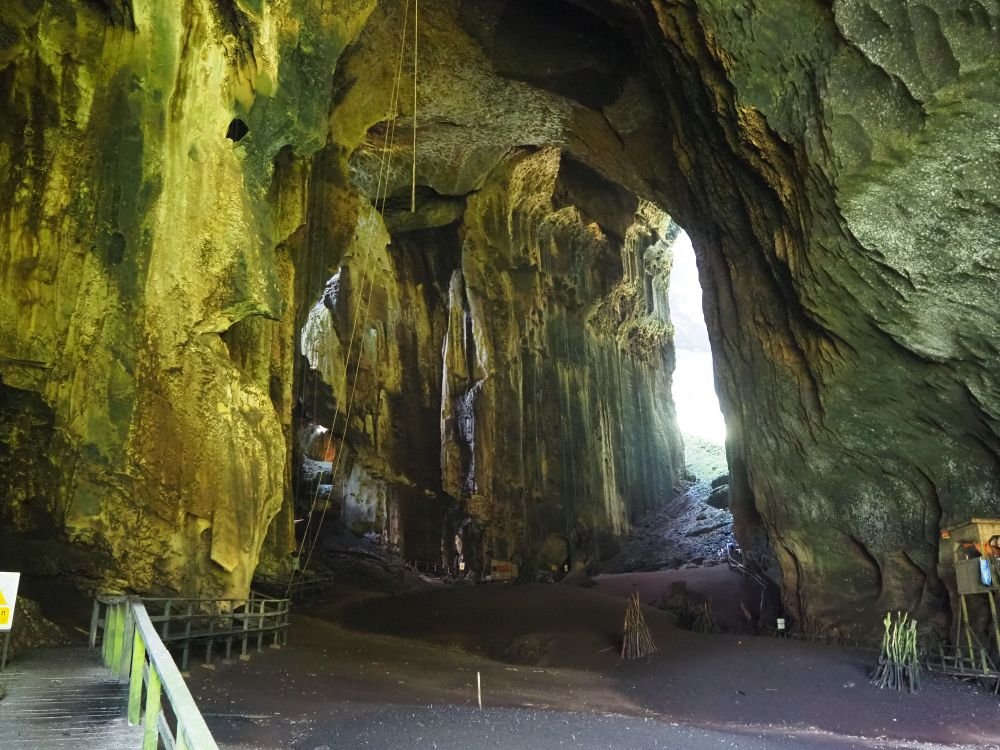
The Gomantong Cave in Borneo is one of Sabah’s most remarkable natural wonders. Located in the Gomantong Forest Reserve near Sandakan, the cave is world-famous for its swiftlet nests used in bird’s nest soup and its thriving bat population. For centuries, the cave has been central to Sabah’s culture, economy, and eco-tourism. Today, it is a highlight for travelers exploring Borneo’s caves, wildlife, and Kinabatangan River. Whether you’re fascinated by the ancient practice of bird’s nest harvesting, eager to witness the evening bat exodus, or simply looking to explore Sabah’s caves, Gomantong Cave offers a truly unique adventure in Malaysian Borneo.
Location of Gomantong Cave in Borneo & How to Get There
From Sandakan to Gomantong Cave
- Distance: 110 km (approx. 2 hours by car).
- Transport: Private car, hired driver, or guided tour packages.
From Kinabatangan River to Gomantong Cave
- Distance: Around 30–45 minutes by car.
- Popular as a half-day excursion for visitors staying at Sukau or Bilit lodges.
Transportation Options in Sabah
- Guided tours: The most convenient choice, often combined with Kinabatangan River cruises.
- Sabah car rentals: Flexible option for independent travelers.
- Public transport: Limited—best to rely on tours or hired vehicles.
History & Cultural Significance of Gomantong Cave Borneo
> For centuries, the Orang Sungai community has harvested swiftlet nests from Gomantong Cave. These nests, formed from swiftlet saliva, are considered a delicacy in Chinese cuisine, particularly for bird’s nest soup. The trade has historically connected Sabah with international markets, making Gomantong Cave one of Borneo’s most economically valuable caves. Today, harvesting is carefully regulated by the Sabah Wildlife Department, ensuring sustainable use while preserving cultural traditions.
The Swiftlet Nests of Gomantong Cave
Types of Swiftlets
- White nests – Highest quality, translucent, and most expensive.
- Black nests – Mixed with feathers, less valuable but still in demand.
Harvesting Practices Inside Gomantong Cave
- Nest harvesting occurs twice a year.
- Local harvesters climb bamboo scaffolding inside the cave, risking their lives to collect nests.
- This tradition is passed down through generations, symbolizing cultural resilience.
Bird’s Nest Soup Industry in Borneo
- Considered a luxury food, prized for its health benefits.
- Gomantong’s nests are exported across Asia, making the cave a vital hub of the industry.
Wildlife in Gomantong Cave Borneo
> Gomantong Cave is not only about swiftlets, but also home to an entire ecosystem.
- Bats in Gomantong Cave: Thousands roost inside, producing a spectacular evening bat exodus.
- Cockroaches & insects: Cover the cave floor, feeding on bat guano.
- Predators: Snakes, centipedes, and other animals thrive in this environment.
- Birds in Gomantong Forest Reserve: Outside the cave, hornbills, kingfishers, and other tropical birds are commonly sighted.
Exploring Gomantong Cave as a Tourist
> Tourists can explore Gomantong Cave through its boardwalk trail, which allows visitors to enter the cave safely.
Boardwalk Trail Inside Gomantong Cave
- Wooden path runs through the main chamber.
- Provides close views of swiftlets and bats.
Visitor Safety & Health Tips
- Expect strong smells from guano.
- Wear proper shoes as surfaces can be slippery.
- Bring insect repellent for mosquitoes.
What to Bring When Visiting Gomantong Cave
- Flashlight or headlamp.
- Hat and sturdy shoes.
- Water and light snacks.
Best Time to Visit Gomantong Cave in Sabah
- Swiftlet Harvesting Seasons: April–August and October–December.
- Evening (around 5–6 PM): Witness the famous bat exodus.
- Dry season months: Roads are more accessible, especially for independent travelers.
Conservation & Eco-Tourism at Gomantong Cave Borneo
> The Sabah Wildlife Department oversees the conservation of Gomantong Cave. Efforts include:
- Protecting swiftlet populations from overharvesting.
- Ensuring sustainable bat populations.
- Promoting eco-tourism as an alternative economic driver.
Gomantong Cave is part of the larger forest reserve, which also shelters orangutans, hornbills, and other rare wildlife, making it vital to Borneo’s biodiversity.
Nearby Attractions Around Gomantong Cave
Kinabatangan River Cruises
- Famous for sightings of proboscis monkeys, pygmy elephants, and crocodiles.
- Often combined with visits to Gomantong Cave.
Sepilok Orangutan Rehabilitation Centre
- A world-renowned sanctuary for orphaned orangutans.
Bornean Sun Bear Conservation Centre
- Protects and rehabilitates the smallest bear species in the world.
Accommodation Near Gomantong Cave Borneo
Lodges in Sukau & Bilit
- Ideal for wildlife enthusiasts exploring both Gomantong Cave and Kinabatangan River.
Hotels in Sandakan
- Ranges from budget guesthouses to comfortable resorts.
Food & Dining Options Near Gomantong Cave
- Sandakan town offers delicious seafood.
- River lodges provide full-board dining, often featuring local flavors.
Comparison: Gomantong Cave vs. Other Famous Caves in Borneo
Gomantong Cave vs. Deer Cave (Mulu, Sarawak)
- Gomantong Cave: Famous for swiftlet nests and bird’s nest harvesting.
- Deer Cave: One of the largest cave chambers in the world, home to millions of bats.
Gomantong Cave vs. Batu Caves (Peninsular Malaysia)
- Gomantong Cave: A natural cave with wildlife and eco-tourism.
- Batu Caves: A Hindu religious landmark near Kuala Lumpur.
Travel Itinerary: Gomantong Cave & Kinabatangan River
2D1N Sandakan & Gomantong Cave Tour
- Day 1: Arrival in Sandakan, visit Sepilok Orangutan Centre, overnight in Sandakan.
- Day 2: Drive to Gomantong Cave, explore cave, transfer to Kinabatangan River lodge.
3D2N Kinabatangan & Gomantong Cave Wildlife Package
- Day 1: Travel from Sandakan to Kinabatangan, evening river cruise.
- Day 2: Morning river safari, visit Gomantong Cave in afternoon.
- Day 3: Wildlife watching, return to Sandakan.
Frequently Asked Questions (FAQ)
1. Where is Gomantong Cave located?
It is located near Sandakan in Sabah, inside the Gomantong Forest Reserve.
2. What makes Gomantong Cave Borneo famous?
It is renowned for its swiftlet nests, bird’s nest harvesting, and bat populations.
3. Can tourists visit Gomantong Cave during nest harvesting?
Yes, but only during regulated harvesting seasons with supervision.
4. What wildlife can I see at Gomantong Cave?
Swiftlets, bats, cockroaches, snakes, and surrounding forest species like hornbills.
5. Can Gomantong Cave be combined with Kinabatangan tours?
Yes, it is often paired with Kinabatangan River cruises.
Conclusion: Why Gomantong Cave Borneo Should Be on Your Travel List

The Gomantong Cave in Sabah, Borneo is more than a cave, it’s a living cultural and ecological treasure. From the swiftlet nests harvested for centuries to the thrilling bat exodus at dusk, Gomantong Cave offers a rare glimpse into Borneo’s biodiversity and traditions. Combined with a Kinabatangan River tour or a Sandakan wildlife adventure, this cave is a must-visit for anyone exploring Sabah. Make sure to include Gomantong Cave Borneo in your travel itinerary for an unforgettable eco-tourism experience.


0 Comments